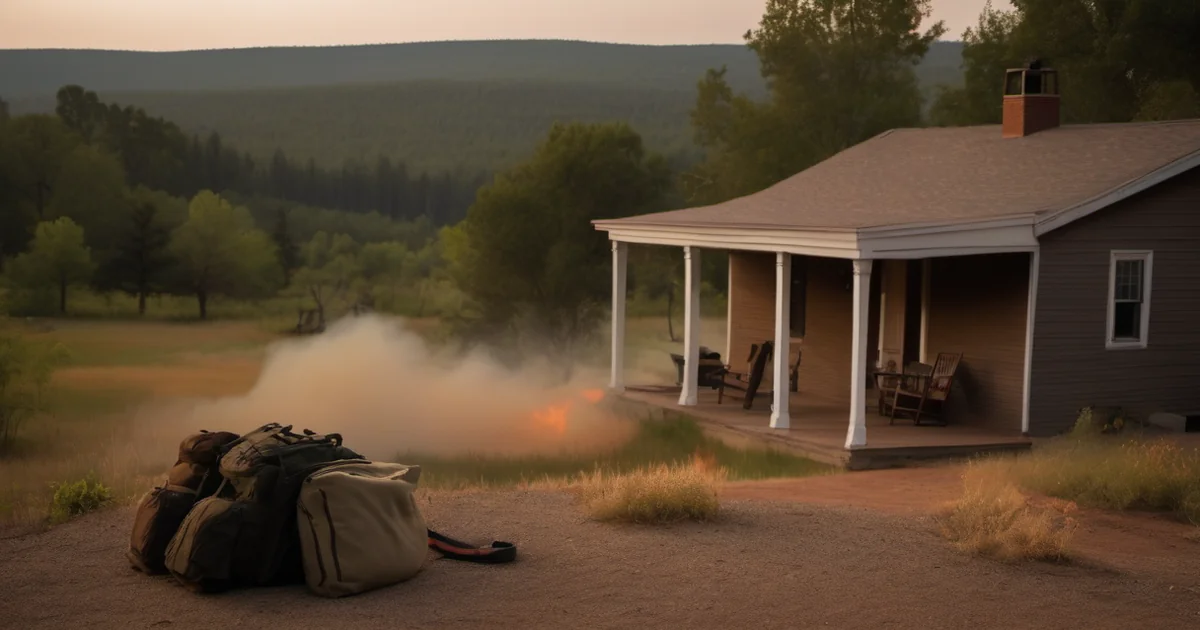
Prepare for a wildfire
2023 was Canada's worst wildfire season on record: 18.5 million hectares burned, 200,000+ evacuated, smoke darkened New York skies. BC alone saw the McDougall Creek (Kelowna), Donnie Creek and Bush Creek East fires. Alberta's 2024 Jasper fire destroyed 30% of the townsite. Wildfires are no longer a BC/Alberta problem alone — Ontario, Quebec and even the Yukon now face mega-fires.
Families who evacuated successfully had three things: a packed bag in the car or by the door (go-bag, not bug-out), documents in a fire-safe pouch or cloud backup, and an N95 (KN95 minimum) per person for smoke. BC Emergency Management recommends 72-hour kit + a separate evacuation bag — and reviewing your FireSmart property assessment annually.
How to prepare for wildfire season
Home FireSmart: 1.5 m non-combustible zone around the house (gravel, not mulch). Clean gutters of needles and leaves twice a year. Move firewood at least 10 m from the house. Replace cedar shake roofs (most flammable). See FireSmart Canada zone guidelines.
72-hour go-bag in the car: water (4 L/person), N95 masks, prescription medications (7-day supply), pet food and crates, important documents (passport, deed, insurance) in waterproof pouch or USB backup. Phone charger and powerbank. $200-500 cash in small bills (ATMs and POS fail when towers burn).
During evacuation: follow Alertable, AlertBC or provincial alert apps. Close all windows and vents (smoke ingress). Leave outdoor lights on so firefighters can see the house. Do NOT return until BC Wildfire Service or RCMP confirms safe — fires re-ignite, hotspots flare for weeks.