Emergency Food Supply Guide
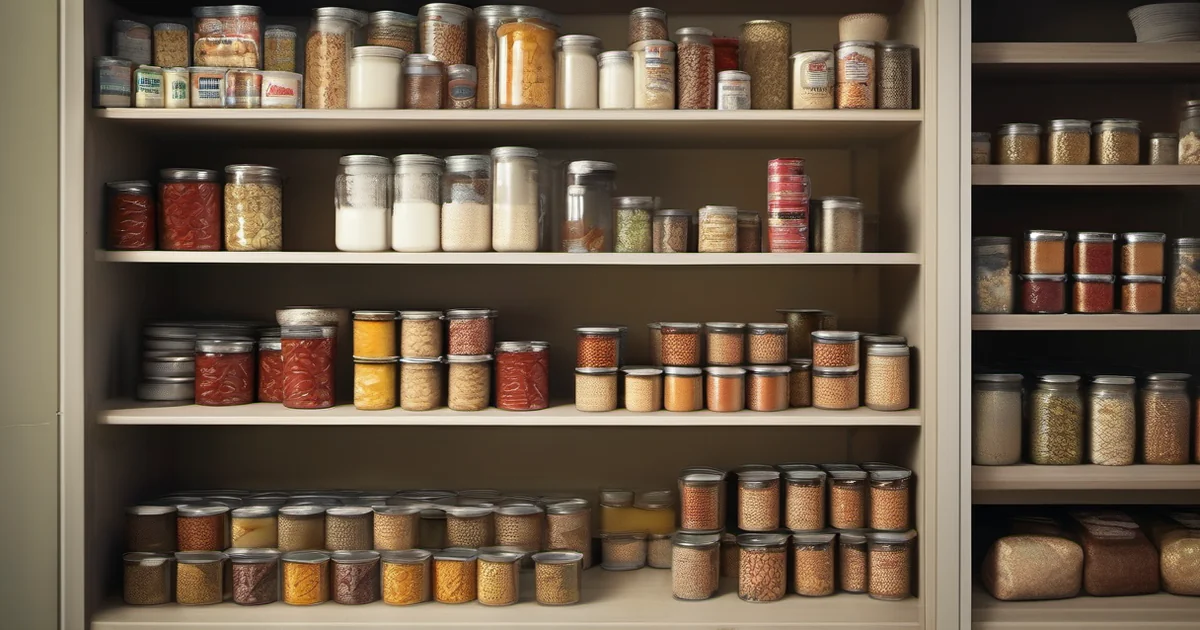
When a disaster strikes, grocery store shelves can empty within hours. We saw it during the COVID-19 panic-buying of March 2020 (pasta, flour, tinned tomatoes, toilet paper), and we see it after major storms: when the May 2022 Ontario-Quebec derecho knocked out power for about a million customers, and when Hurricane Fiona battered Atlantic Canada later that year, rural shops ran dry within 48 hours of the power going out. Building an emergency food supply is not alarmist: it is common sense. The Government of Canada's canada.ca/prepare campaign asks every household to keep at least 72 hours of food, water and essentials ready to hand.
The trick is not to stockpile food at random, but to plan a supply that meets your nutritional needs, lasts months or years without refrigeration, and consists of food you actually want to eat. A pantry of items you would never touch is a waste of money and space — and easy to forget when you need it.
How Many Calories Do You Need
In an emergency, your body needs energy for maintaining vital functions and for the physical activity the situation demands (clearing storm damage, walking, staying warm). The WHO sets a reference minimum of 2,000 kcal per person per day for adults in crisis situations. This varies:
- Active adults: 2,000 to 2,500 kcal per day.
- Children aged 4 to 10: 1,200 to 1,800 kcal per day.
- Teenagers: 1,800 to 2,500 kcal per day (they are still growing).
- Sedentary older adults: 1,600 to 2,000 kcal per day.
- Pregnant or breastfeeding women: add 300 to 500 extra kcal per day.
Our emergency planner calculates exact amounts per person based on age and scenario duration.
| People | 72 h (3 days) | 7 days | 14 days |
|---|---|---|---|
| 1 | 6,000 kcal | 14,000 kcal | 28,000 kcal |
| 2 | 12,000 kcal | 28,000 kcal | 56,000 kcal |
| 3 | 18,000 kcal | 42,000 kcal | 84,000 kcal |
| 4 | 24,000 kcal | 56,000 kcal | 112,000 kcal |
| 5 | 30,000 kcal | 70,000 kcal | 140,000 kcal |
Essential Foods for Your Emergency Pantry
These are the food categories that offer the best balance of nutrition, shelf life, and practicality in Canada:
- Tinned goods: beans, tuna, chicken, vegetables, soups and tomatoes. No preparation needed and easy to find at Loblaws, Real Canadian Superstore, No Frills, Metro, Sobeys, Walmart or Costco.
- Grains and pulses: rice, pasta, oats, and dried lentils. Long shelf life and calorie-dense — store in airtight containers to keep moths and damp out.
- Freeze-dried meals: Mountain House pouches keep for 25+ years (sold in Canada through Canadian Tire and MEC); popular with backcountry hikers and search-and-rescue volunteers.
- Energy and protein bars: compact, calorie-dense, no preparation needed.
- Nuts and dried fruit: healthy fats and quick energy. Store in airtight containers in a cool cupboard.
- UHT long-life milk and peanut butter: protein sources that last months unopened — store brands like President's Choice and No Name are widely stocked.
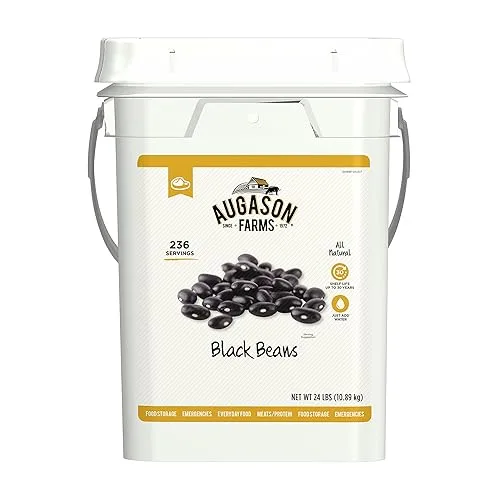
Dried Black Beans Emergency Supply — 237 Servings, 30-Year Shelf Life
The pulses row of the list above, bought once instead of rotated every six months. A 30-year shelf life is what lets a supply survive being forgotten in a basement
Storage Tips for Canada Homes
- Store food at 10 to 21 °C in a dark place with low humidity
- Avoid unheated garages, attics and outbuildings — across Canada these spaces swing from well below freezing in winter to baking heat in summer, and damp basements rust tins fast
- Use airtight containers to protect against moisture and pests
- Apply FIFO: first in, first out — eat the oldest items first
- Know the difference: "best before" is a quality date (food is usually still safe after), while an expiry date is a safety date — Health Canada and the Canadian Food Inspection Agency (CFIA) set the labelling rules
- Keep a manual tin opener with your food supply — electric openers are useless in a power cut
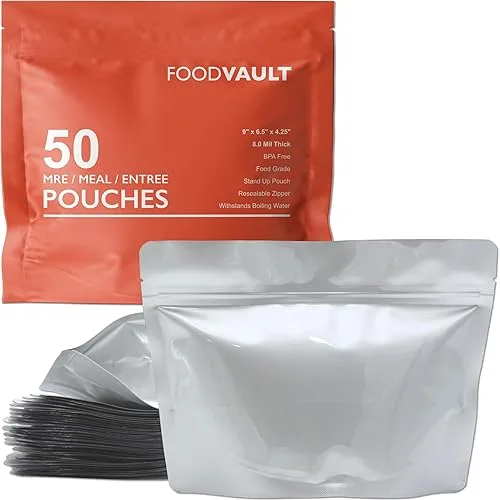
MRE Mylar Bags, 16 Mil, Resealable Stand-Up Pouches
This is the "airtight containers" line above, done properly. Rice, pasta and oats keep far longer sealed in mylar than in the bag they came home in — and mylar shrugs off the damp of a Canadian basement
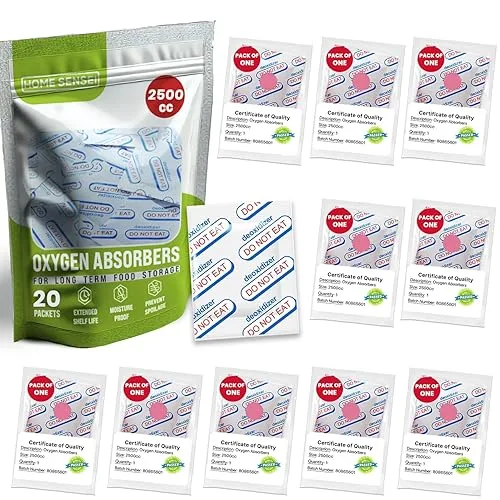
2500cc Oxygen Absorbers, 20-Pack (Individually Packed)
The other half of the job: mylar without oxygen absorbers still lets grain go stale. Individually packed, so opening one pouch does not spend the other nineteen
Frequently asked questions
How much tinned food do I need per person for 7 days?
A practical 7-day stockpile per adult is roughly 14,000 kcal total (2,000 kcal x 7 days). Translated into a Canadian grocery basket: 14 tins of hearty soup or stew (Habitant, Campbell's, or canned beans with sausages — about 400 kcal each), 4 tins of tuna or salmon (Clover Leaf), 4 tins of fruit in juice, 2 jars of peanut butter, 1 kg of porridge oats (Quaker), 500 g of crackers or crispbreads, 6 cereal bars and a bag of mixed nuts. Add long-life UHT milk for coffee and cereal. For a family of four, multiply by four (roughly 56 tins plus dry goods) — a single grocery cart at No Frills or Costco. During the 2022 Ontario-Quebec derecho, about a million customers lost power for days, so a full week of no-fuss tins is no longer overkill.
Recommended products
Compare prices and availability on Amazon.co.uk
Can I eat food from a freezer after a 48-hour power cut?
Often yes, but follow Health Canada and CFIA rules carefully. A full freezer keeps food safe for around 48 hours if the door stays closed (24 hours if it is half-full). During the 1998 Great Ice Storm, some households in Quebec and Eastern Ontario went without power for weeks, and the guidance is clear: 1) Keep the freezer door shut until you really need to check. 2) If food still has ice crystals or is at 4 °C or below, it can be cooked and eaten or refrozen, though quality may suffer. 3) Throw out any raw meat, fish, dairy, or cooked dishes that have been above 4 °C for more than 2 hours — the risk of salmonella, campylobacter and listeria is not worth it. 4) Pack the freezer with bottles of frozen water in advance; they extend safe time and double as drinking water once thawed. 5) Move sausages, ground meat and ready meals to the top, where you can grab and cook them first on a camping stove.
Recommended products
Compare prices and availability on Amazon.co.uk
What no-cook meals work during a Canada power cut?
If your power has failed but you have a gas stovetop, you can often still boil pasta and rice — light it with a match if the igniter is dead. If electricity is off and you have an induction or electric stovetop — common in newer Canadian builds — you need true no-cook options. A practical no-cook menu: Breakfast: overnight oats with UHT milk, bananas, cereal bars, crackers with peanut butter. Lunch: tinned tuna or sardines on crispbread, hummus and crackers, cheese (lasts 2 to 3 days unrefrigerated in winter) with crackers, tinned baked beans straight from the tin. Dinner: tinned chilli, ravioli or stew eaten cold or warmed on a camping stove, tinned mixed bean salad with olive oil, foil-wrapped potatoes in dying barbecue embers. Snacks: nuts, dried fruit, energy bars, cookies, chocolate. Keep a butane camping stove and two gas cartridges in the cupboard — they cost about $25 and unlock hot drinks, which keep morale up.
Recommended products
Compare prices and availability on Amazon.co.uk
What food does the Government of Canada recommend stockpiling under "Prepare"?
The Government of Canada's GetPrepared campaign (canada.ca/prepare), run by Public Safety Canada alongside the Alert Ready emergency-alert system, asks households to keep enough non-perishable food and bottled water for at least 72 hours. Specifically it suggests: tinned meat and fish, tinned vegetables and fruit, baked beans, tinned soup, long-life UHT milk, crackers, instant oatmeal, dried pasta and rice, peanut butter, energy or cereal bars, pet food, baby formula and food if needed, plus a manual tin opener. The guidance also flags special needs — celiac, halal, kosher, diabetic, baby and pet — and recommends rotating stock and using a "first in, first out" cupboard. The Canadian Red Cross adds a flashlight, battery radio, acetaminophen, prescription medicines and a power bank to round out a 72-hour kit. Build the basics first, then extend to 7 days, then add specialist items.
Recommended products
Compare prices and availability on Amazon.co.uk
How do I cook tinned food without electricity?
You have several safe options. 1) Butane camping stove (Coleman, Campingaz) — single-burner stoves cost $20 to $40 from Canadian Tire, MEC or Amazon; a single cartridge boils a kettle in 4 to 5 minutes. 2) Gas stovetop — if you have a piped gas range, it usually works in a power cut because the burner needs no mains power; light it with a match if the spark fails. 3) Wood-burning stove or barbecue (outdoors only) — never bring a barbecue or generator indoors, the carbon monoxide can kill silently. Health Canada and fire services warn every year about CO poisoning linked to indoor camping stoves and barbecues. 4) Alcohol or Trangia-style stove — favoured by backcountry hikers and Scout leaders; slow but very stable. Always cook outside or in a well-ventilated space, keep a working CO alarm running, and store no more than the safe limit of butane cartridges indoors.
Recommended products
Compare prices and availability on Amazon.co.uk
Verified Food and Nutrition Products
Browse our curated catalogue of emergency food, rations, and supplements on Amazon.
View food products →Our recommendation
If you do only one thing, buy shelf-stable food your household already eats and cover at least 72 hours. You do not need military rations to get started: tinned beans, tinned tuna, crackers, peanut butter, and trail mix are practical, familiar, and easy to rotate. Our food calculator estimates calories and portions, and the EmergencyKitLab Canada planner turns that into a complete shopping list.
Calculate exactly what you need
Our planner adjusts quantities to your family and situation.
Build your personalised plan