Emergency Power and Lighting Guide
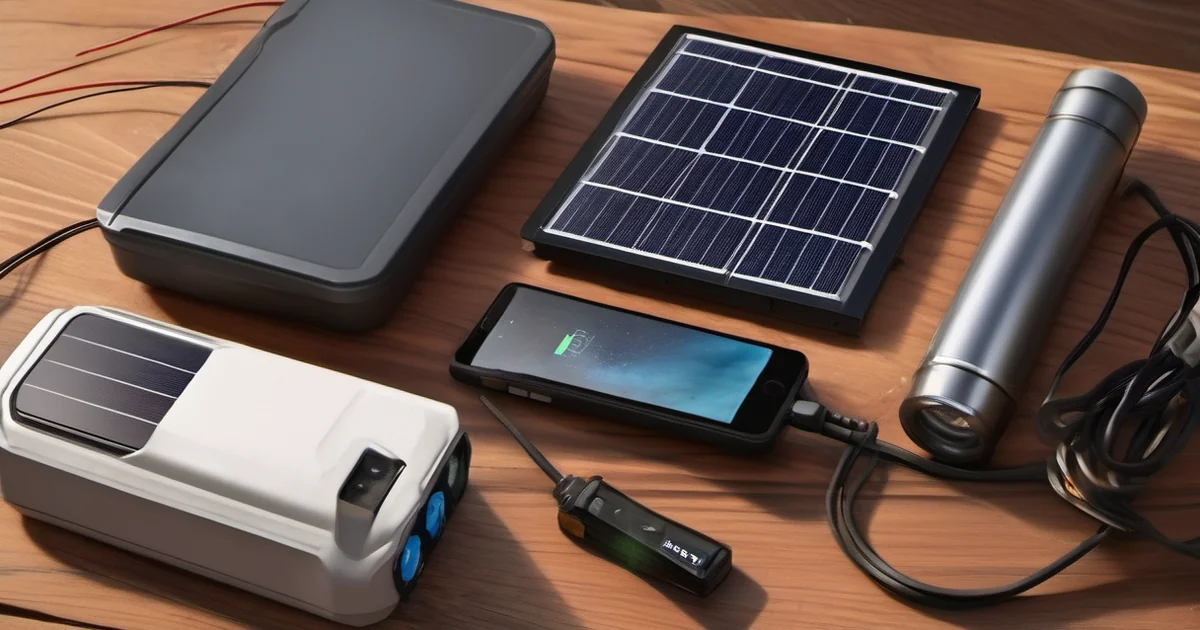
A power outage means more than sitting in the dark. It means losing your fridge and freezer (and everything in them), being unable to charge your phone, having no heat, and losing access to live updates about what is going on. In Canada, extended outages are usually linked to ice storms, wind events, wildfire-driven damage, and deep-cold grid faults. The May 2022 Ontario–Quebec derecho cut power to roughly a million customers — Hydro-Québec alone lost 550,000 — and Environment Canada called the damage to Ottawa's grid worse than the 1998 ice storm. The 1998 Great Ice Storm left some Quebec and Eastern Ontario households without power for up to 33 days. These are the events to plan for.
The Government of Canada's Get Prepared campaign recommends that every household be ready to function without electricity for at least 72 hours. A well-assembled power kit does not need to be expensive or complicated. It just needs to cover three basics: light, communication, and device charging.
Essential Power and Lighting Gear
- LED flashlights: at least one per person. Headlamps are even better since they keep your hands free.
- Spare batteries: stock at least 2 full sets per device. Lithium batteries last longer and cope better with cold Canadian winters.
- Power bank: 20,000 mAh minimum for a family. Enough to fully charge 4 to 5 smartphones.
- Hand-crank AM/FM radio: essential for receiving Environment Canada severe-weather warnings, Alert Ready messages and local broadcasts when the cell network is down. Models with the Weatheradio VHF band add ECCC alerts directly.
- Portable solar panel: 20 W or larger panel for extended outages. Can recharge power banks during daylight, even on overcast days.
- Portable power station: 500 Wh or more (EcoFlow Delta, Bluetti AC, Jackery Explorer) for running a furnace fan, fridge, medical equipment and Wi-Fi during long outages.
- Carbon monoxide alarm: if you use a generator, propane or kerosene heater or camping stove — a CSA-certified CO alarm costs around $30 and is required by law in most provinces. Generators must only ever run outdoors, well away from windows.
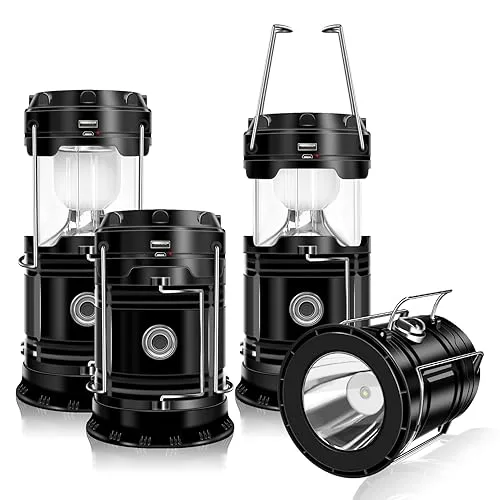
DIBMS Collapsible Solar Camping Lanterns (4-Pack)
Four lanterns light a room each without an open flame, which also removes the candle that starts fires during outages. Solar and USB, so a 33-day scenario like 1998 does not run down your battery stock
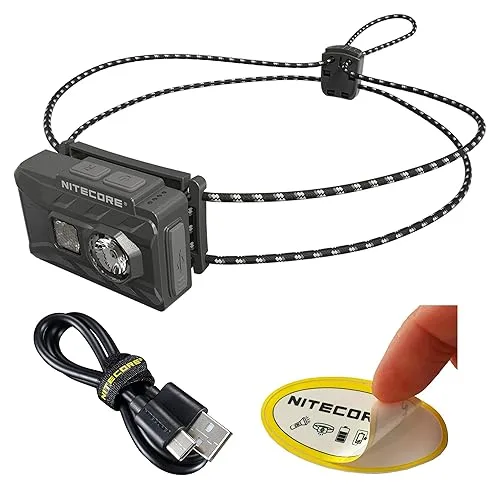
Nitecore NU20 Classic Headlamp, 360 Lumen, USB-C
The "headlamps are even better" line above, in one purchase. Hands free is what you want when you are clearing ice-storm damage or restarting a furnace in the dark, and USB-C refills from the same power bank as your phone
| Equipment | Quantity | Purpose |
|---|---|---|
| LED flashlights | At least one per person | Lighting; headlamps keep your hands free |
| Spare batteries | At least 2 full sets per device | Keep devices running; lithium copes better with cold winters |
| Power bank | 20,000 mAh minimum for a family | Fully charge 4 to 5 smartphones |
| Hand-crank AM/FM radio | — | Receive Environment Canada warnings and Alert Ready when the network is down |
| Portable solar panel | 20 W or larger | Recharge power banks during daylight in extended outages |
| Portable power station | 500 Wh or more | Run a furnace fan, fridge, medical equipment and Wi-Fi during long outages |
| Carbon monoxide alarm | — | Safety when using a generator, propane or kerosene heater or camping stove |
Communication Without Power
A hand-crank or solar-powered AM/FM radio is essential for receiving Environment Canada severe-weather warnings, Alert Ready broadcasts and local emergency updates. Smartphones lose charge quickly when everyone is trying to call at once. Save battery by switching to airplane mode and using only SMS or short messages.
Medical Equipment Continuity
If anyone in your household depends on mains-powered medical equipment (CPAP machine, home dialysis, oxygen concentrator, nebulizer, electric wheelchair), a portable power station of at least 500 Wh is not optional — it is a medical necessity. Discuss exact power and runtime requirements with your specialist team, and ask your electricity utility whether it runs a medical or critical-care registry (many do, such as BC Hydro's Medical Alert program) so crews know your address depends on power.
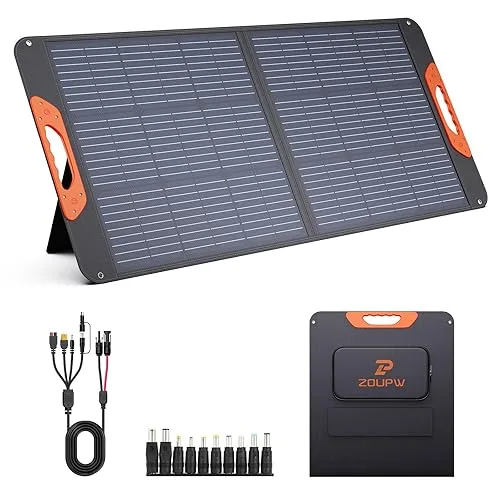
ZOUPW 100 W Foldable Portable Solar Panel
Five times the 20 W floor listed above, which is what it takes to still refill a power bank on a grey day instead of only in full sun. Folds flat and pairs with the 500 Wh power station that keeps a CPAP running
Frequently asked questions
What should I do in a Canadian power outage lasting more than 24 hours?
After the first 24 hours, switch from "wait it out" to "manage it". Practical steps: 1) Report the outage to your electricity utility (Hydro One, Hydro-Québec, BC Hydro, Manitoba Hydro, SaskPower, ENMAX/EPCOR, Nova Scotia Power, NB Power and others all have 24-hour outage lines and online maps) so your address is logged and you get a restoration estimate. 2) Keep the fridge and freezer closed — a full freezer stays safe for ~48 h, a fridge ~4 h (Health Canada). 3) Unplug sensitive electronics to protect against surges when power is restored. 4) Charge phones and power banks from a 12 V car USB if needed — never run the engine in an attached garage because of carbon monoxide risk. 5) Move to one warm room, close internal doors, and use blankets and layers. 6) Check on elderly neighbours, especially in deep cold. After the 1998 ice storm and the 2022 derecho, the households that coped best had a 20,000 mAh power bank, a headlamp and a non-electric heat source.
Recommended products
Compare prices and availability on Amazon.co.uk
Who do I call about a power outage or a downed power line in Canada?
Canada has no single national power-cut hotline — outages are handled by your local electricity utility. Find your provider’s 24-hour outage number and online outage map before you need them: Hydro One or your local distribution company (Ontario), Hydro-Québec (Quebec), BC Hydro (British Columbia), Manitoba Hydro, SaskPower, ENMAX/EPCOR/FortisAlberta/ATCO (Alberta), Nova Scotia Power, NB Power, Newfoundland Power, or Maritime Electric (PEI). Save the number in your phone now. If you see a downed or sparking power line, treat it as live: stay back at least 10 metres, keep others and pets away, and call 911 immediately, then report it to your utility. Never drive over a downed line. If a line falls on your car, stay inside and call 911 unless there is a fire.
Recommended products
Compare prices and availability on Amazon.co.uk
Is there compensation for a long power outage in Canada?
Canada has no national, automatic compensation scheme for power outages the way some countries do. Electricity is regulated province by province, and rules vary. Some utilities and provincial regulators have service-quality or reliability standards, and a few offer credits in specific circumstances (for example after missed scheduled appointments or unusually long restoration times), but most weather-related outages do not trigger an automatic payment. What to do: 1) Keep a record — note outage start and end times, and photograph any spoiled food or damage. 2) Check your home or tenant insurance: many policies cover freezer/fridge food spoilage and some cover power-interruption losses, often with a deductible. 3) Contact your utility and ask directly whether any credit applies to your situation. 4) For widespread disasters, watch for federal or provincial disaster financial assistance programs, which are announced after major events. Do not rely on compensation — the cheaper insurance is a stocked kit and backup power.
Recommended products
Compare prices and availability on Amazon.co.uk
How can vulnerable or medically dependent households get extra support during outages?
If someone in your home relies on power for medical equipment, plan ahead rather than waiting for an outage. 1) Ask your electricity utility about a medical or critical-care registry. Many Canadian utilities keep a list of life-support and medically dependent customers (for example BC Hydro’s Medical Alert program and similar programs at Hydro One and Hydro-Québec) so crews prioritise restoration and can give advance notice of planned work — but you usually have to sign up in advance, often with a doctor’s confirmation. 2) Have independent backup power — a portable power station sized to your device (confirm watt-hours and runtime with your equipment supplier), since registries do not guarantee instant restoration. 3) Build a plan with your care team for where to go if an outage outlasts your backup (a relative’s home, a designated warming/cooling centre, or hospital). 4) Enable Alert Ready on your phone so you receive emergency broadcasts.
Recommended products
Compare prices and availability on Amazon.co.uk
How do I keep my fridge and freezer cold during a 3-day power outage?
The Health Canada rule is simple: a full freezer keeps food safe for around 48 hours unopened, a fridge for around 4 hours. To stretch this through a 3-day outage like the 2022 derecho or a post-Fiona stretch in Atlantic Canada: 1) Stop opening the doors — every peek loses an hour of cold. 2) Pack the freezer with 2-litre bottles of frozen water before the storm; ice acts as thermal mass and gives you drinkable water as it melts. 3) Move milk, yogurt, butter and meats from the fridge into the freezer in the first hour while everything is still cold. 4) Group items tightly so they cool each other — empty spaces warm fastest. 5) Pile blankets over a chest freezer to slow heat ingress. 6) After 48 h, check the freezer with a thermometer: food at or below 4 °C with ice crystals can be cooked or refrozen; anything warmer, when in doubt, throw it out. 7) If the outage runs over 3 days, a 1,000 Wh portable power station (EcoFlow Delta 2 or Bluetti AC180) can keep an efficient fridge-freezer running for 12 to 24 h per charge.
Recommended products
Compare prices and availability on Amazon.co.uk
Verified Power and Lighting Products
Browse our curated catalogue of flashlights, batteries, power banks, and solar panels on Amazon.
View power products →Portable Power Stations for Emergencies →
Our recommendation
If you do only one thing, keep a headlamp with spare batteries and a fully charged power bank ready to grab. Those two items cover the most common failure points fast: seeing at night and keeping your phone usable for alerts and 911 calls. Our energy calculator estimates how many watt-hours you need, and the EmergencyKitLab Canada planner builds the full setup around your scenario.
Calculate exactly what you need
Our planner adjusts quantities to your family and situation.
Build your personalised planWant to go further? Build an Offline survival computer (Project NOMAD).