Emergency First Aid Kit Guide
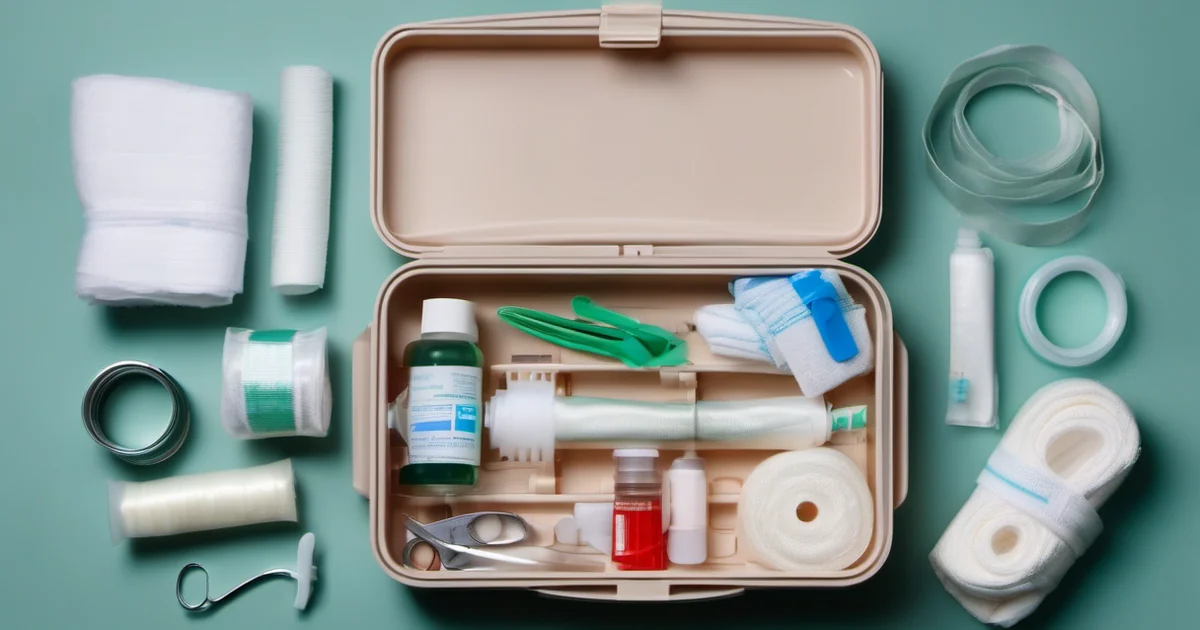
In an emergency, EMS can take hours — or in rural and remote Canada, much longer — to reach you. Most preventable deaths in an emergency happen in the first hours, before professional help arrives, for lack of basic first aid (Canadian Red Cross). A deep cut while cooking, a fall in the dark during an outage, frostbite during a winter storm, or an allergic reaction when the pharmacy is closed — any of these can become serious without a kit on hand. This EmergencyKitLab guide walks through what to include and how to organize it.
You do not need to be a paramedic: with the right supplies and basic knowledge you can treat most minor injuries and stabilize more serious ones until help arrives. The single best upgrade to any kit is training — take a Canadian Red Cross or St. John Ambulance Standard First Aid + CPR/AED course.
Important notice: this guide is informational and does not replace hands-on first aid training. For any serious medical emergency, call 911. For non-urgent health advice, call your provincial health line (811 — Telehealth Ontario, HealthLink BC, Health Link Alberta and others). For poisonings, call your provincial Poison Centre.
Wound care supplies
Wound care is the foundation of the kit. It is for cleaning, disinfecting and protecting the minor injuries that are by far the most common in any emergency.
- Sterile gauze pads: in several sizes (5x5 cm and 10x10 cm) to clean and cover wounds. Keep at least 10 to 15.
- Roller and triangular bandages: 5 cm and 7.5 cm rolls to hold gauze, immobilize sprains or apply pressure; a triangular bandage doubles as a sling. 2 to 3 of each.
- Medical tape: to secure gauze and dressings — hypoallergenic is best.
- Assorted adhesive bandages: fabric ones hold up better than plastic. One variety pack.
- Blister dressings: blisters are common if you have to walk a long way during an evacuation.
Round out the basics with cleaning and disinfecting supplies:
- Single-use saline: for flushing wounds and eyes — safer and more practical than tap water in an emergency.
- Antiseptic: chlorhexidine or povidone-iodine wipes. Chlorhexidine is gentler and does not stain. Avoid hydrogen peroxide — it damages healthy tissue.
- Antibiotic ointment: a Polysporin-type ointment for clean wounds at risk of infection.
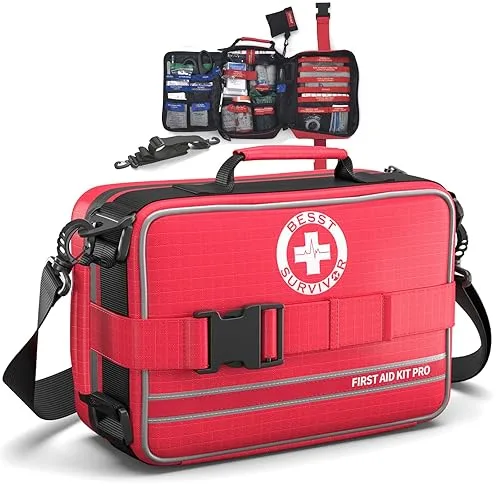
Comprehensive Home First Aid Kit with Shoulder Strap
A base kit covering the wound-care list above, which you then top up rather than assemble from nothing. The shoulder strap matters: it is a bag you grab on the way out, not a box you have to empty first
Basic medications
Which medications you include depends on your household, but there is a common core that covers the most frequent problems. Use the Canadian generic names — drug brands vary.
- Acetaminophen (Tylenol): for pain and fever. The safest analgesic for most people, including children (pediatric dose) and during pregnancy.
- Ibuprofen (Advil/Motrin): anti-inflammatory and analgesic. Good for muscle pain, sprains and headaches. Not for people with stomach problems.
- ASA (Aspirin): useful to have, and chewing one can help during a suspected heart attack while you wait for 911 (ask the dispatcher).
- Anti-diarrheal (loperamide/Imodium): diarrhea can be serious in an emergency, especially if water or food is contaminated — dehydration is the real danger.
- Oral rehydration (Pedialyte/Gastrolyte): dissolves in safe drinking water. Essential for treating dehydration from diarrhea, vomiting or heat.
Add topical treatments for common emergency injuries:
- Antihistamine: for mild allergic reactions (stings, hives). Cetirizine (Reactine) or loratadine (Claritin) do not cause drowsiness; keep some diphenhydramine (Benadryl) too.
- Burn gel: for the burns that are common when cooking over open flame or using candles during an outage.
- Hydrocortisone cream: for itching, rashes and insect bites.
Chronic medication: the most important part
If anyone in your household takes medication regularly (blood pressure, diabetes, thyroid, epilepsy, asthma…), this section is critical. Public Safety Canada recommends keeping a reserve of your prescription medication — aim for at least 7 days, and 30 if your plan allows it. In an emergency, pharmacies may be closed, out of stock or unreachable.
- Ask your doctor or pharmacist about keeping an emergency supply ahead of time.
- Store the reserve in your emergency kit, separate from the medication you use day to day.
- Check expiry dates every 3 months and rotate the stock.
- Keep a copy of your prescriptions and a list of medication names, doses and schedules — on paper, not only on your phone.
For people with diabetes who use insulin, remember that insulin needs refrigeration. In a long power outage, ask your pharmacist about storage options and temperature limits, and see our energy guide for ways to keep medical devices powered.
Tools and equipment
- Trauma shears (blunt-tip scissors): to cut bandages, tape and clothing if needed.
- Tweezers: to remove splinters, ticks or glass fragments.
- Digital thermometer: fever is a key indicator. Do not use mercury thermometers — toxic if they break.
- Nitrile gloves: to protect yourself when treating others. At least 10 pairs. Nitrile causes fewer allergies than latex.
Round out the tools with protection and stabilization gear for more serious situations:
- N95 respirators: useful against wildfire smoke and dust as well as for pandemic situations. Keep at least 10. (Canada's 2023 wildfire smoke made these a household item.)
- Emergency (mylar) blanket: weighs under 50 g folded and can prevent hypothermia by reflecting body heat. Keep at least 2 per person — vital in a Canadian winter.
- CPR face shield: a barrier for rescue breaths.
- Tourniquet: for severe bleeding. It needs training to use correctly — a first aid course will teach you.
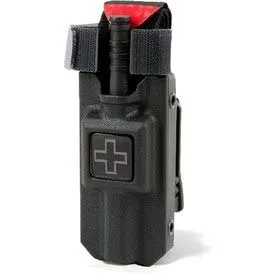
C-A-T Tourniquet + Rigid Case Combo
Catastrophic bleeding is the one injury where minutes decide the outcome, and Canadian EMS response times outside a city are measured in tens of minutes. Buy it with the Red Cross or St. John Ambulance course that teaches you to use it
A naloxone kit
Opioid poisoning is a leading cause of accidental death in Canada. Free take-home naloxone kits are available without a prescription at most Canadian pharmacies and many community sites; naloxone temporarily reverses an opioid overdose and buys time for 911 to arrive. It is safe to give if you are not sure — it does no harm if opioids are not involved.
- Pick up a free nasal-spray or injectable kit and keep one with your first aid supplies.
- If you suspect an overdose: call 911, give naloxone, and start rescue breaths/CPR.
- The Good Samaritan Drug Overdose Act offers legal protection to those who call for help.
Tailor the kit to your household. Add anything for children (pediatric acetaminophen and ibuprofen, the right bandage sizes), for seniors (a spare of any daily medication, a list of conditions and allergies), and for pets (a basic pet first aid kit and your vet's number). EpiPens for anyone with severe allergies and a spare inhaler for anyone with asthma belong here too — and remember an EpiPen and insulin both have temperature limits to respect.
Summary table: kit contents
| Item | Quantity | Notes |
|---|---|---|
| Sterile gauze pads | 10–15 | Several sizes; clean and cover wounds |
| Roller/triangular bandages | 2–3 each | Secure gauze, immobilize sprains, sling |
| Medical tape | 1–2 | Hypoallergenic |
| Assorted bandages + blister dressings | 1 pack | Fabric holds up better than plastic |
| Single-use saline | — | Flush wounds and eyes |
| Antiseptic + antibiotic ointment | — | Chlorhexidine/povidone-iodine; Polysporin-type |
| Acetaminophen + ibuprofen + ASA | — | Pain/fever; anti-inflammatory; heart-attack ASA |
| Anti-diarrheal + oral rehydration | — | Loperamide; Pedialyte/Gastrolyte sachets |
| Antihistamine + burn gel + hydrocortisone | — | Allergies, burns, itching |
| Chronic medication | 7–30 day reserve | Stored separately; plus a copy of prescriptions |
| Trauma shears + tweezers + thermometer | — | No mercury thermometers |
| Nitrile gloves + N95s | 10+ each | Wildfire smoke, dust, pandemic |
| Emergency blanket | 2 per person | Prevents hypothermia — key in winter |
| CPR face shield + tourniquet | 1 each | Tourniquet needs training |
| Naloxone kit | 1 | Free at Canadian pharmacies |
Organizing your kit the EmergencyKitLab way
A kit you cannot find things in is a kit that fails when seconds count. Organize it in clear, labelled pouches by purpose:
- Wound care (gauze, bandages, tape, saline, antiseptic).
- Medications (the basic core, kept dry and clearly labelled).
- Chronic meds + documents (prescription reserve, paper copy of prescriptions, allergy and medical-condition list).
- Tools and protection (shears, tweezers, thermometer, gloves, N95s, blanket, CPR shield, naloxone).
Tape a small card to the lid with 911, your provincial health line (811), your Poison Centre and an out-of-province contact. Keep one full kit at home and a smaller version in the car — Canadian driving distances mean help can be far away.
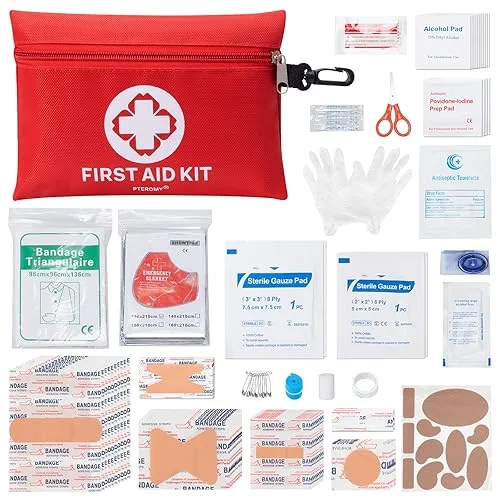
PTEROMY 150-Piece Mini First Aid Kit
The "smaller version in the car" from the paragraph above. On a highway where the next town is an hour away, the kit that counts is the one travelling with you
Maintenance: check every 3 months
- Check expiry dates on medications, ointments and saline, and replace anything expired.
- Rotate the chronic-medication reserve so it stays current.
- Restock anything you used and confirm gloves and blankets are intact.
- Store the kit somewhere cool and dry that everyone in the household knows.
Quick checklist: your first aid kit
- Wound care: gauze, roller/triangular bandages, tape, assorted + blister dressings, saline, antiseptic, antibiotic ointment
- Meds: acetaminophen, ibuprofen, ASA, antihistamine, anti-diarrheal, oral rehydration, burn gel, hydrocortisone
- Chronic-medication reserve (7–30 days) + paper copy of prescriptions
- Tools: trauma shears, tweezers, digital thermometer, nitrile gloves, N95s
- Protection: emergency blanket (2/person), CPR face shield, tourniquet
- A free naloxone kit
- A card with 911, 811 and your Poison Centre
A first aid kit is one of the highest-value things you can prepare, but it only works if you know how to use it and keep it current. Pair it with a Canadian Red Cross or St. John Ambulance course, and let the emergency planner tailor the contents to your household.
Sources: Canadian Red Cross, St. John Ambulance, Health Canada, Public Safety Canada (GetPrepared.ca).
Frequently asked questions
What should a Canadian home first aid kit contain?
Build it in four groups. Wound care: sterile gauze, roller and triangular bandages, medical tape, assorted and blister bandages, single-use saline, antiseptic (chlorhexidine or povidone-iodine) and a Polysporin-type antibiotic ointment. Medications: acetaminophen, ibuprofen, ASA, an antihistamine, an anti-diarrheal, oral rehydration (Pedialyte/Gastrolyte), burn gel and hydrocortisone. Tools and protection: trauma shears, tweezers, a digital thermometer, nitrile gloves, N95s, an emergency blanket (2 per person — vital in winter), a CPR face shield and a tourniquet. Canada-specific: a free take-home naloxone kit and a 7–30-day reserve of any chronic medication with a paper copy of prescriptions. A pre-made kit certified to a provincial workplace standard is a good starting point you then top up.
Recommended products
Compare prices and availability on Amazon.co.uk
Acetaminophen or ibuprofen — which one should I use?
Acetaminophen (Tylenol) treats pain and fever and is the safest choice for most people, including children at the pediatric dose and during pregnancy; it is easy on the stomach but you must respect the daily maximum because overdose damages the liver. Ibuprofen (Advil/Motrin) is an anti-inflammatory, so it is better for sprains, muscle pain, dental pain and inflammation — but take it with food and avoid it if you have stomach ulcers, kidney problems or are dehydrated. Many people alternate the two for stubborn fever or pain (ask your pharmacist about timing). Keep ASA (Aspirin) as well: chewing one can help during a suspected heart attack while you wait for 911. For dosing questions, call your provincial health line at 811.
Recommended products
Compare prices and availability on Amazon.co.uk
Should I keep a naloxone kit at home in Canada?
Yes — it is one of the easiest high-impact additions to a Canadian kit. Opioid poisoning kills thousands of Canadians a year, and it does not only affect people who use drugs: accidental exposures and prescription opioids are involved too. Free take-home naloxone kits are available without a prescription at most pharmacies and many community health and harm-reduction sites, in nasal-spray and injectable forms. Naloxone temporarily reverses an opioid overdose with essentially no downside — if you give it and opioids were not the cause, it does no harm. If you suspect an overdose: call 911, give naloxone, start rescue breaths and CPR, and stay until help arrives. The federal Good Samaritan Drug Overdose Act gives legal protection to people who call for help at an overdose.
Recommended products
Compare prices and availability on Amazon.co.uk
How do I treat hypothermia and frostbite?
Both are real risks in a Canadian winter power outage. Hypothermia (shivering, confusion, slurred speech, drowsiness): call 911, move the person somewhere warm, remove wet clothing, and warm the core first with blankets and an emergency (mylar) blanket — skin-to-skin contact helps. Give warm sweet drinks only if they are fully alert; do not rub the limbs or use direct high heat, and handle the person gently. Frostbite (white or greyish, hard or waxy skin, numbness — usually fingers, toes, ears, nose): get indoors, do not rub or walk on a frostbitten foot, and rewarm gently in warm (not hot) water around 37–39 °C only if there is no chance of it refreezing — refreezing causes far worse damage. Do not use a stove, fire or heating pad, which can burn numb skin. Seek medical care. When in doubt, call 811 or 911.
Recommended products
Compare prices and availability on Amazon.co.uk
How often should I check and rotate my first aid kit?
Every 3 months — put a recurring reminder on your phone. Each check: 1) Look at expiry dates on medications, ointments, burn gel and saline, and replace anything expired (expired meds lose potency). 2) Rotate the chronic-medication reserve so it stays current — use the older stock day-to-day and refill the kit with newer. 3) Restock anything you used. 4) Confirm gloves have not perished, blankets are sealed, and the naloxone kit is in date. 5) Re-read the card with 911/811/Poison Centre and update contacts. Twice a year, do it when the clocks change so it is easy to remember — the same time you test smoke and CO alarms.
Recommended products
Compare prices and availability on Amazon.co.uk
Verified First Aid Supplies
Browse our curated catalogue of first aid kits, wound care and medical supplies.
View first aid supplies →Our recommendation
If you do only one thing, take a Canadian Red Cross or St. John Ambulance Standard First Aid + CPR/AED course — supplies are only as good as the hands using them. Then keep a stocked, organized kit at home and a smaller one in the car. The EmergencyKitLab planner tailors the contents to your household and scenario.
Calculate exactly what you need
Our planner adjusts quantities to your family and situation.
Build your personalized plan