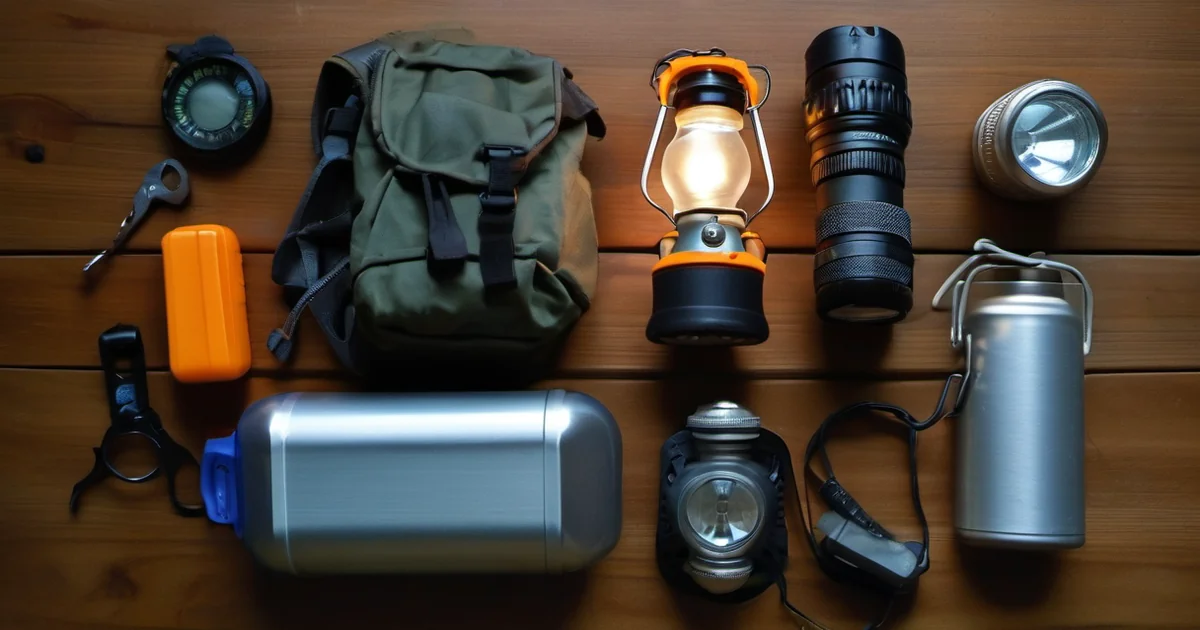
Power and Lighting
Flashlights, batteries, power banks, and solar panels to stay powered in the dark.
Complete guide to emergency power and lighting →
How to choose emergency power and lighting, the EmergencyKitLab way
Power is the resource almost everything else depends on in a modern outage: no charge means no phone, no light, no radio and, for some households, no medical device. The trap is to fixate on one big purchase instead of building a layered setup that matches what you actually need to keep running. The EmergencyKitLab planner helps you work out which devices are genuinely essential before you spend anything.
- Think in watt-hours, not just mAh. A typical phone holds 12 to 18 Wh, so a 20,000 mAh power bank (around 74 Wh nominal, roughly 55 to 60 Wh usable after conversion losses) realistically gives three to four full phone charges, not the ten the marketing implies.
- Match the tier to the job. A USB power bank covers phones, torches and a radio. A portable power station of 200 to 500 Wh runs laptops, a CPAP machine for a night or LED lighting for days. Only step up to 1,000 Wh and above if you need to run a fridge or power tools.
- For lighting, prioritise runtime and usability over raw lumens. 100 to 300 lumens is plenty for indoor tasks, and a headlamp that frees both hands beats a brighter torch you have to hold. Choose rechargeable units that also accept standard AA or AAA cells as a fallback.
- Be realistic about solar. A 100 W folding panel in good direct sun produces only a few hundred watt-hours across a day, and nothing after dusk or under heavy cloud. Treat solar as a slow top-up for a long outage, never as your first-day power source.
Sizing portable power: from a phone to a fridge
The single most useful habit when buying emergency power is to stop thinking in milliamp-hours and start thinking in watt-hours, because that is the unit that tells you what a device can actually run. A phone battery stores somewhere between 12 and 18 watt-hours. A 20,000 mAh power bank is marketed on its cell capacity, but once you account for the 3.7 V cell voltage and the losses in stepping up to 5 V USB, the usable output is around 55 to 60 watt-hours. That means three or four full phone charges in the real world, which is genuinely useful for a 48-hour outage but a long way from the inflated figures on the box.
When phones and a torch are not enough, the next tier is a portable power station, essentially a large battery with mains-style sockets. A unit in the 200 to 500 watt-hour range is the sweet spot for most homes: it will recharge laptops and phones many times over, run LED lighting for days, and keep a CPAP machine going through the night, which is the requirement that pushes a lot of households from "nice to have" to "essential". You only need to step up into the 1,000 watt-hour-plus class if you intend to run something with a heating element or a compressor, such as a small fridge, a kettle or power tools, and at that point weight and price climb steeply.
The trap at both ends is real. People over-buy a heavy power station they never charge or test, then find it flat when they need it; or they under-buy, assuming a single power bank will cover a family for three days. The fix is to size against a short written list of must-run devices and their daily watt-hours, add a sensible margin, and stop there. In every prolonged outage I have followed closely, the households that coped were not the ones with the most kilowatt-hours on a shelf — they were the ones whose modest capacity was charged, labelled and matched to a need they had actually thought through.
Lighting that works when you are tired and in the dark
Emergency lighting is judged by how usable it is at 3am when you are cold and half-asleep, not by the headline lumen count. For almost everything you do indoors during an outage — finding the stopcock, reading a label, helping a child to the bathroom — 100 to 300 lumens is ample, and a high-lumen torch mostly buys you a shorter runtime and a hotter hand. The most underrated piece of lighting kit is a simple headlamp, because it points where you look and leaves both hands free to actually do the task. A small LED lantern that throws light in every direction is the other quiet workhorse, far better than a torch for lighting a room while a family sits together.
Power source is where lighting setups quietly fail. A rechargeable torch is convenient until the day the charge has leaked away in a drawer, so the strongest setups are hybrids: a rechargeable primary light plus at least one unit that takes standard AA or AAA cells, with a sealed pack of spares stored alongside. Standardise on one or two battery sizes across your torches, radio and any other gear so a single pack of spares serves everything. Lithium AA cells are worth the premium for emergency stores because they hold charge for a decade and tolerate cold far better than alkalines.
A word on candles, because they come up every time: they are a last resort, not a plan. An open flame in a dark, possibly crowded home with children or pets is a genuine fire risk, and the light they give is poor. Keep a few for morale or a total kit failure, but do your real lighting with LEDs. Finally, store the lights where you will find them without power — a torch in a known spot by each bed and one by the consumer unit — because a brilliant lantern buried in a loft box is no use when the room goes black.
Staying informed and keeping it all charged
When the grid goes down the mobile network often follows, either immediately or once local mast batteries drain after a few hours. That is the moment a simple battery or wind-up radio earns its place, giving you official broadcasts and weather warnings when your phone shows no signal. Many emergency radios double as a torch and a small USB charger, which is convenient, but treat the built-in dynamo as a trickle for a single emergency call rather than a serious power source — a minute of frantic cranking yields only a few minutes of talk time. Buy the radio for the radio, and rely on your power bank for charging.
Charging strategy is what ties the whole category together. Keep power banks and any station near full between events, because a battery slowly self-discharges and a flat power bank discovered mid-outage is a familiar disappointment. Charge phones to 100% the moment a storm warning lands, switch them to low-power mode early to stretch each charge, and resist topping up non-essential devices in the first day until you know how long the outage will last. If you own a solar panel, deploy it at first light to claw back some of what you used overnight, accepting that it is a slow drip rather than a tap.
The recurring lesson from real outages is how ordinary the winners look. They are rarely the people with the largest battery on the wall; they are the ones whose phone stayed charged because they topped it up early, who could see what they were doing because a headlamp was where they left it, and who knew what was happening because a cheap radio kept working when the network did not. A layered, tested, modest setup beats an expensive one you have never switched on.
Recommended products
Before you choose any specific product, list the devices you genuinely need to keep alive during a power cut and roughly how much energy each one uses per day. For most households the honest answer is modest: a couple of phones, a few lights, and a radio. That is a job for two torches, a 20,000 mAh power bank and a set of spare batteries, not a wall of equipment. The picture changes completely if someone in the home relies on a powered medical device, a fridge for insulin, or heating that needs electricity to run — and that is exactly the kind of requirement people discover too late. The most common mistake we see is buying a single large power station and trusting everything to it; the second is overestimating need in the abstract and then underestimating it when the lights actually go out. Redundancy across small, simple devices beats one big box you have never tested.
Products reviewed by the EmergencyKitLab Canada team using civil protection and Red Cross guidance as baseline references
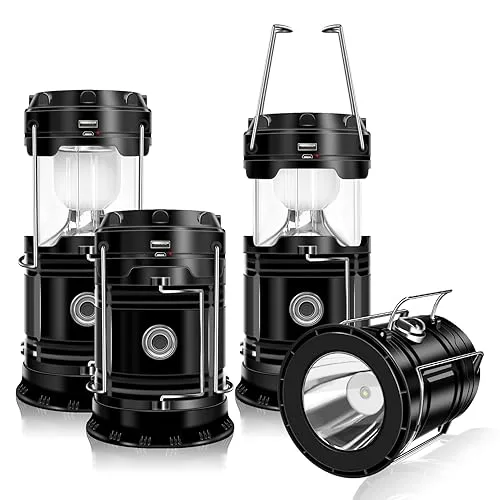
DIBMS 4-Pack Solar Camping Lantern, Collapsible LED Solar USB Rechargeable Lantern Flashlight Emergency Hanging Lights f
DIBMS 4-Pack Solar Camping Lantern, Collapsible LED Solar USB Rechargeable Lantern Flashlight Emergency Hanging Lights for Camping Hurricanes Power Outages Indoor Outdoor
4.6 (914)

Star Patrol Mega-Bright Rechargeable Spotlight, AS SEEN ON TV, Tactical & Emergency Flashlight, 10 Modes, Turbo Boost Up
Star Patrol Mega-Bright Rechargeable Spotlight, AS SEEN ON TV, Tactical & Emergency Flashlight, 10 Modes, Turbo Boost Up to 100%, Built-in Kickstand & Phone Charger, for Camping, Emergencies, Walking
4.5 (932)
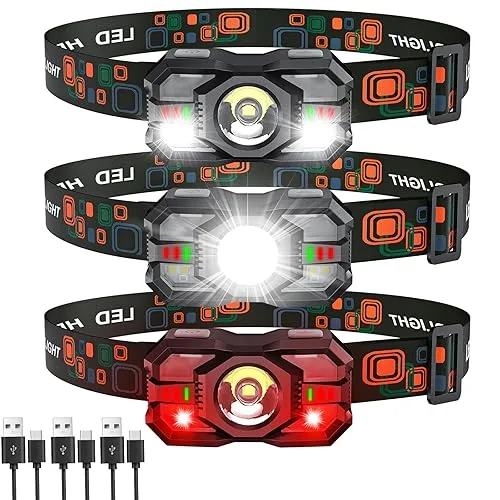
Rechargeable Headlamp Flashlight 3-Pack, 2000 Lumen Super Bright LED Headlight with Red Light, Headlamps for Adults Kid,
Rechargeable Headlamp Flashlight 3-Pack, 2000 Lumen Super Bright LED Headlight with Red Light, Headlamps for Adults Kid, Waterproof Lightweight Head Lamp for Outdoor Camping Running Hiking Fishing
4.5 (904)
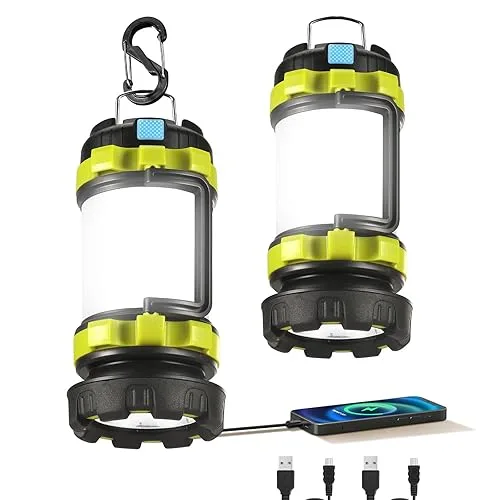
2 Pack LED Camping Lantern Flashlight Rechargeable, Consciot Portable Torch with 6 Light Modes, 3600mAh Power Bank, IPX4
2 Pack LED Camping Lantern Flashlight Rechargeable, Consciot Portable Torch with 6 Light Modes, 3600mAh Power Bank, IPX4 Waterproof, USB C, Camping Lights for Hurricane, Emergency, Survival Kits
4.6 (829)
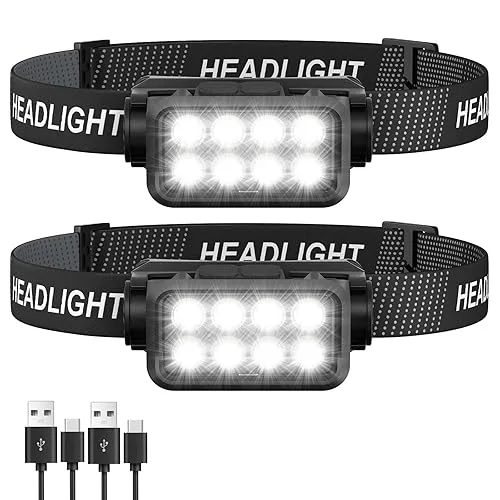
Rechargeable Headlamp Flashlight 2-Pack, 8 LED 2500 Lumen Ultra-Light Bright Headlight with Motion Sensor, Waterproof Li
Rechargeable Headlamp Flashlight 2-Pack, 8 LED 2500 Lumen Ultra-Light Bright Headlight with Motion Sensor, Waterproof Lightweight Head Lamp for Adult Kid, Headlamps for Outdoor Camping Running Fishing
4.4 (865)
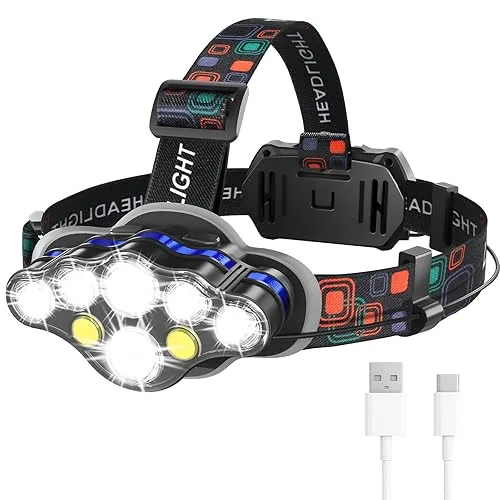
MIOISY Headlamp Rechargeable, 8 LED Super Bright Head Lamp with White Red Light, IPX4 Waterproof Head Lights for Forehea
MIOISY Headlamp Rechargeable, 8 LED Super Bright Head Lamp with White Red Light, IPX4 Waterproof Head Lights for Forehead, 8 Modes Headlight Flashlight for Outdoor Hiking Running Camping
4.4 (852)
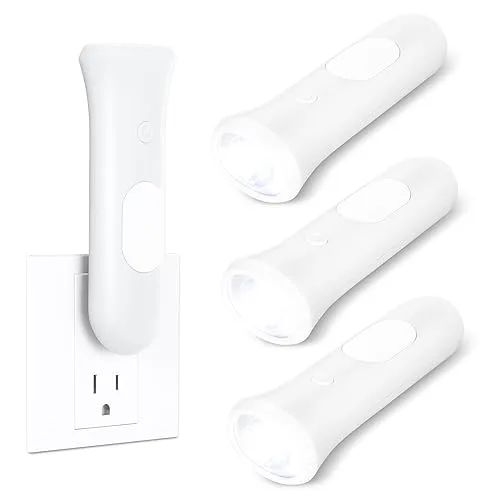
ROSSEX 4 in 1 Emergency Lights for Home Power Failure, 3 Pcs Rechargeable LED Flashlight Plug in Wall, Automatic Turn-On
ROSSEX 4 in 1 Emergency Lights for Home Power Failure, 3 Pcs Rechargeable LED Flashlight Plug in Wall, Automatic Turn-On Power Outage Night Light Flashlight for Hurricane Preparedness Items
4.6 (797)
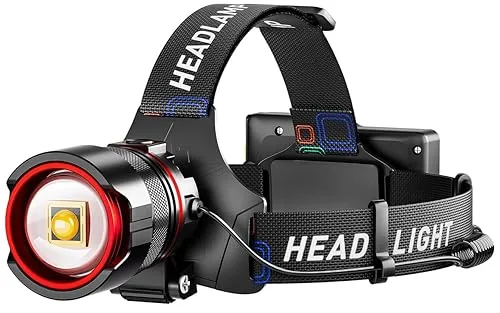
Rechargeable Headlamp 99000 High Lumens, Super Bright LED Head Lamp with Motion Sensor, 12 Modes, IPX7 Waterproof, 125°
Rechargeable Headlamp 99000 High Lumens, Super Bright LED Head Lamp with Motion Sensor, 12 Modes, IPX7 Waterproof, 125° Adjustable, Zoomable Headlight for Adults, Camping, Cycling, Running
4.6 (743)
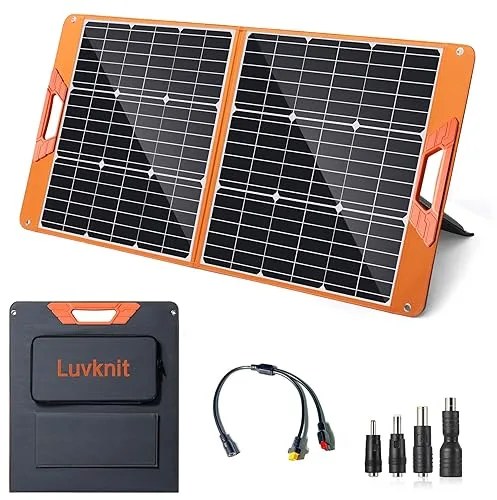
Solar Panels 100Watt Portable 24% High-Efficiency 18V Foldable Solar Charger with USB Outputs for Power Stations, Phones
Solar Panels 100Watt Portable 24% High-Efficiency 18V Foldable Solar Charger with USB Outputs for Power Stations, Phones, IP65 Waterproof Perfect for Camping, RVing, Home Backup and Off-Grid Blackouts
4.5 (620)
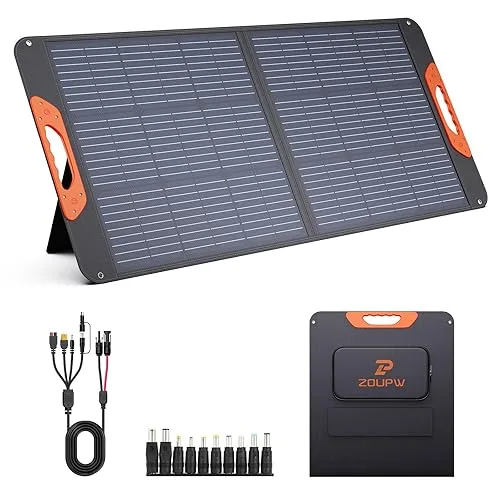
ZOUPW 100W Portable Solar Panel with 5-in-1 Cable,23.5% Efficiency Mono Foldable Solar Charger for Jackery 300/Ecoflow R
ZOUPW 100W Portable Solar Panel with 5-in-1 Cable,23.5% Efficiency Mono Foldable Solar Charger for Jackery 300/Ecoflow River/Anker/Bluetti,IP67 Waterproof for Camping RV Off-Grid Emergency Power
4.6 (604)
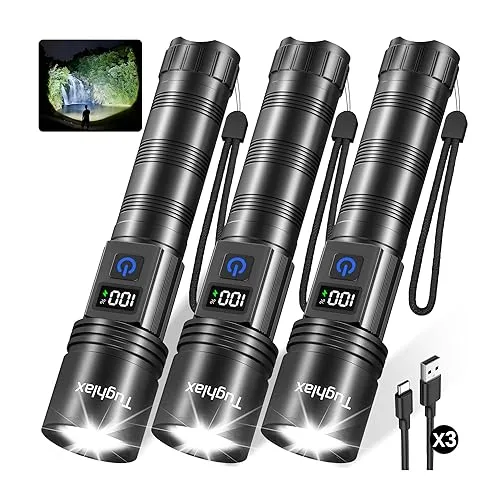
3Pack Rechargeable Flashlights High Lumens, Super Bright Flashlight with LCD Digital Display, 5 Modes Adjustable LED Fla
3Pack Rechargeable Flashlights High Lumens, Super Bright Flashlight with LCD Digital Display, 5 Modes Adjustable LED Flashlight Tactical Flashlights High Powered, Flash Lights for Emergency
4.8 (501)
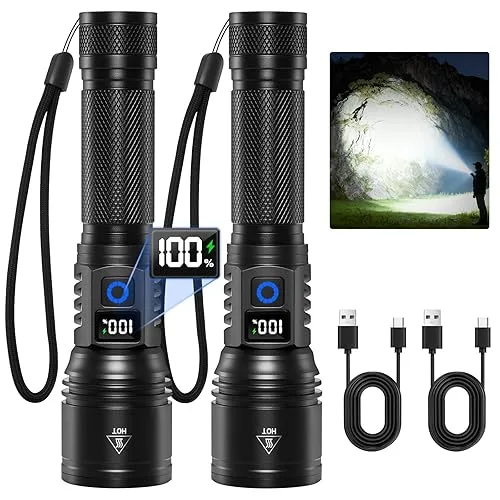
Rechargeable Flashlights High Lumens 2Pack, 5Modes Super Bright Flashlight Rechargeable, LED Flashlight Powerful, Handhe
Rechargeable Flashlights High Lumens 2Pack, 5Modes Super Bright Flashlight Rechargeable, LED Flashlight Powerful, Handheld Tactical Flash Lights for Home Emergencies Camping Essentials, Gifts for Men
4.7 (460)
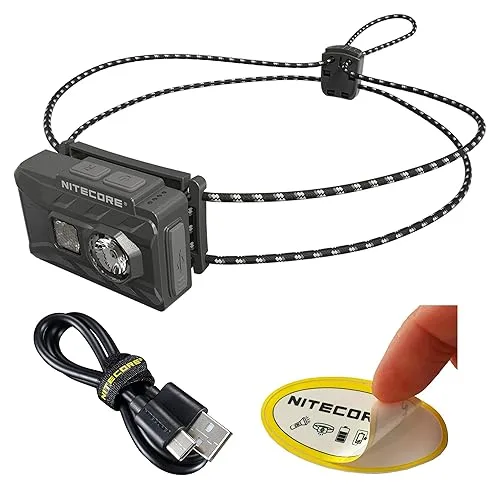
Nitecore NU20 Classic Ultralight Headlamp, 360 Lumen USB-C Rechargeable Lightweight for Backpacking, Camping, Running wi
Nitecore NU20 Classic Ultralight Headlamp, 360 Lumen USB-C Rechargeable Lightweight for Backpacking, Camping, Running with Auxilary White and Red Light
4.8 (437)
The links above are affiliate links. If you purchase through them, we earn a small commission at no extra cost to you. We only recommend products we use or have reviewed ourselves. Learn more →
The best power and lighting setup is the one you keep charged and have actually used at least once. Top up power banks and any power station every three months, confirm your torches still work and the spare batteries are in date, and check that a solar panel produces what you expect on a sunny afternoon. Run a one-evening blackout drill with your household so you learn where the light switches you, where the gear lives and how long a charge really lasts. If you have not yet worked out which devices are essential and how much capacity that implies, the free EmergencyKitLab planner gives you the numbers in under five minutes.
power and lighting comparison
| Producte | Valoració |
|---|---|
| DIBMS 4-Pack Solar Camping Lantern, Collapsible LED Solar USB Rechargeable Lantern Flashlight Emergency Hanging Lights f | ★ 4.6 (914 ressenyes) |
| Star Patrol Mega-Bright Rechargeable Spotlight, AS SEEN ON TV, Tactical & Emergency Flashlight, 10 Modes, Turbo Boost Up | ★ 4.5 (932 ressenyes) |
| Rechargeable Headlamp Flashlight 3-Pack, 2000 Lumen Super Bright LED Headlight with Red Light, Headlamps for Adults Kid, | ★ 4.5 (904 ressenyes) |
| 2 Pack LED Camping Lantern Flashlight Rechargeable, Consciot Portable Torch with 6 Light Modes, 3600mAh Power Bank, IPX4 | ★ 4.6 (829 ressenyes) |
| Rechargeable Headlamp Flashlight 2-Pack, 8 LED 2500 Lumen Ultra-Light Bright Headlight with Motion Sensor, Waterproof Li | ★ 4.4 (865 ressenyes) |
| MIOISY Headlamp Rechargeable, 8 LED Super Bright Head Lamp with White Red Light, IPX4 Waterproof Head Lights for Forehea | ★ 4.4 (852 ressenyes) |
Editorial verdict
If you do only one thing, choose a power and lighting option you already know how to use and keep it easy to reach. The most expensive setup is not automatically the right one. Use the EmergencyKitLab Canada planner to size the rest of your household setup correctly.
Our planner calculates exactly what you need based on your situation, headcount, and scenario.
Build your personalized plan